- Blog
Ultrasonic Innovation in Aerospace – A Guide to Composite and Bonded Structure Inspection

27th January 2026
Will Haworth, Sonatest
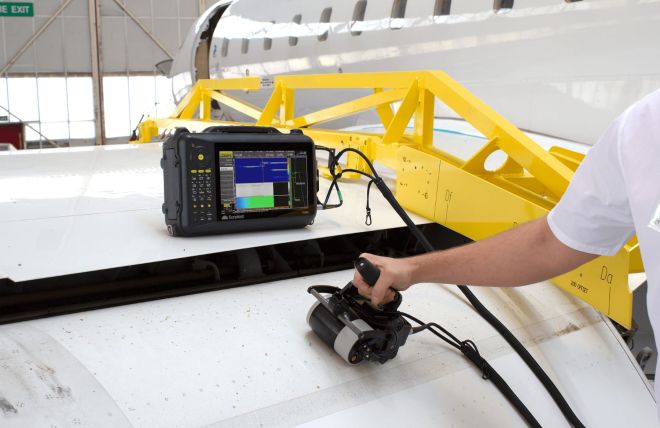
Follow our latest UT inspection series
This blog is the first in a new series exploring how ultrasonic testing (UT) and phased array ultrasonic testing (PAUT) are used across the aerospace industry.
As modern aircrafts increasingly rely on advanced composite materials and bonded assemblies, inspection methods must evolve to meet stricter quality standards and detect flaws that are often hidden deep within complex structures.
Over the coming weeks, we’ll explore practical uses of ultrasonic inspection in aerospace, from detecting delamination in carbon fiber laminates to verifying bond strength in honeycomb sandwich panels, locating flaws in friction stir welds, and assessing damage in curved, tight-radius components.
Whether used during manufacturing or in field maintenance, ultrasonic techniques are essential for ensuring airworthiness, performance, and long-term structural integrity, while also providing a quick turnaround with minimal downtime.
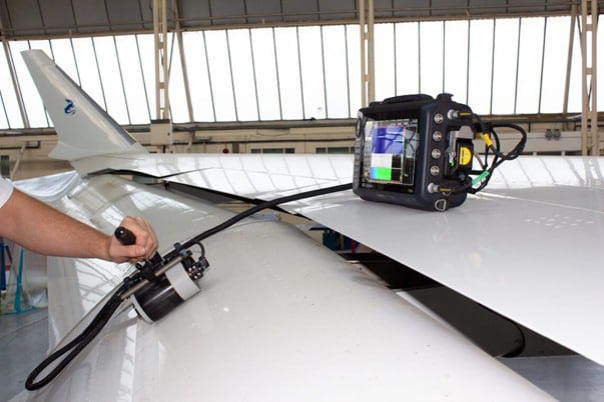
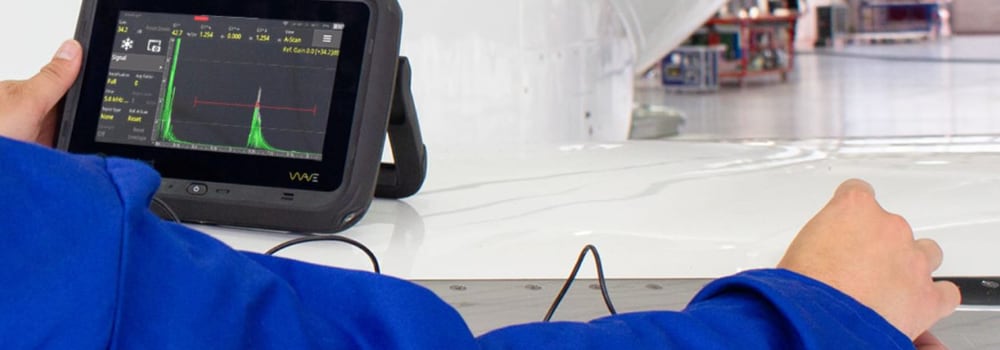
Fig. 1 - Example of aerospace inspection in progress
Traditional Techniques and Their Limitations
For decades, aerospace inspection has relied on well-established methods such as:
- Tap testing for composite integrity
- Visual inspection for impact signs
- Radiographic testing (RT) for weld evaluation
- Conventional single-element UT for thickness or flaw detection
While effective in specific contexts, these techniques often fall short when used with newer aerospace materials and configurations. For example, tap testing lacks sensitivity and repeatability, especially with barely visible impact damage (BVID). Visual inspection can miss internal disbonds, and RT may be impractical or hazardous in certain field settings.
Modern aerospace demands higher-resolution, non-invasive, and quantitative methods that provide traceable data and digital documentation. This is where advanced ultrasonic technologies come into play.
The Shift Toward Advanced Ultrasonic Methods
Modern ultrasonic solutions bring several advancements over traditional approaches:
- Phased Array UT (PAUT) enables beam rastering and focusing to inspect large areas or layered flaws
- Total Focusing Method (TFM) and TFMi™ offer high-resolution imaging with improved sizing and flaw characterization
- Dry-coupled scanning systems eliminate the need for liquid couplant in composite applications
- Encoded scanners paired with software tools allow for full-area flaw mapping and digital traceability
- Low-frequency phased array allows penetration into thick or attenuative composite structures
- WheelProbes make it possible to inspect large areas without compromising coupling or resolution
These tools not only improve defect detection but also reduce inspection time and deliver more comprehensive reporting for quality assurance.
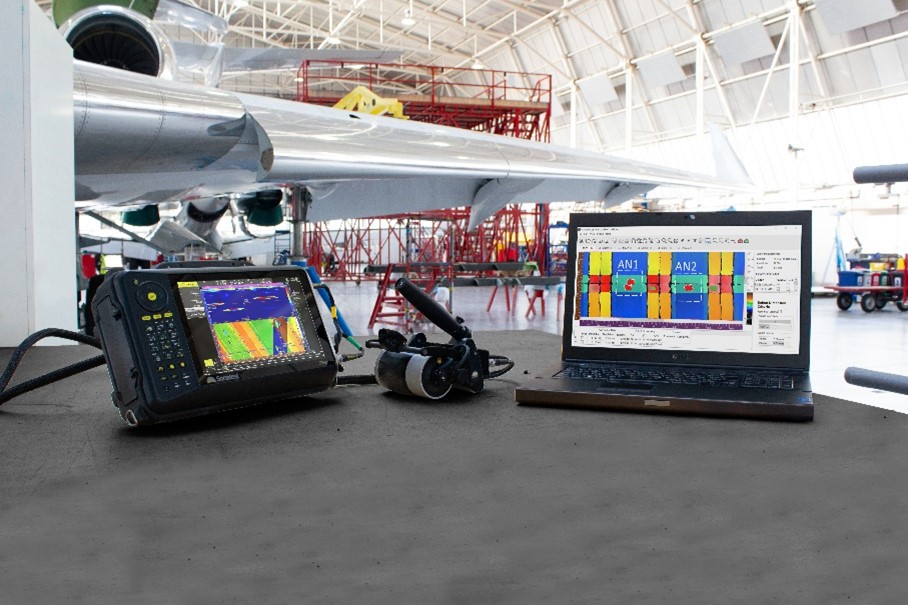
Fig. 2 - Example of ultrasonic data analysis
Where and How UT is Applied in Aerospace Inspection
Throughout this series, we’ll highlight a range of aerospace inspection scenarios and show how ultrasonic techniques are used in each. Key inspection areas include:
- Carbon Fiber Skins
Detect delamination, porosity, and FOD using phased array with flexible wedges or rolling probes. Amplitude and depth C-scans enhance flaw detection and characterization. - Bonded Sandwich Panels
Assess core-to-skin bond quality in Nomex or foam-core structures using pulse-echo and through-transmission techniques. - Friction Stir Welds
Identify tunnel defects, kissing bonds, and incomplete fusion in aluminum welds. TFMiTM imaging improves detection and sizing where flaw orientation is unpredictable. - Impact Damage (BVID)
Assess barely visible internal damage in curved panels. C-scans provide clear depth and amplitude mapping of fiber and resin disruption. - Thick or Attenuative Materials
Use low-frequency phased array probes for insulation panels, stealth coatings, or hybrid layups that attenuate sound. Enables deeper penetration and clearer imaging. - Dry-Coupled Rolling Probes
Scan without gels or immersion. Through-transmission probes detect disbonds or FOD quickly during manufacturing or MRO. - Portable inspection tools (Wave & RSFlite)
Provide encoded data collection, advanced scan planning, and support for both PAUT and conventional probes. - Probe Selection
Rubber wedges, flexible arrays, hydro-coupled, and rolling probes each offer advantages depending on geometry, thickness, and inspection goals.
Each topic is covered in detail through targeted blog posts and application notes to support aerospace NDT teams in choosing the right tools and methods.
Conclusion
Aerospace structures are evolving—so too must the methods we use to inspect them. With composite and bonded materials becoming more common and geometric complexity increasing, traditional inspection approaches are no longer sufficient in isolation.
Modern ultrasonic testing provides a flexible, accurate, and data-rich inspection method that supports both production and maintenance environments. With phased array imaging, flaw mapping, and portable scanning systems, inspectors can now detect and size flaws with greater confidence and consistency.
This blog series will walk through practical inspection applications, share proven techniques, and provide helpful insight into how ultrasonic tools are solving today’s aerospace inspection challenges.
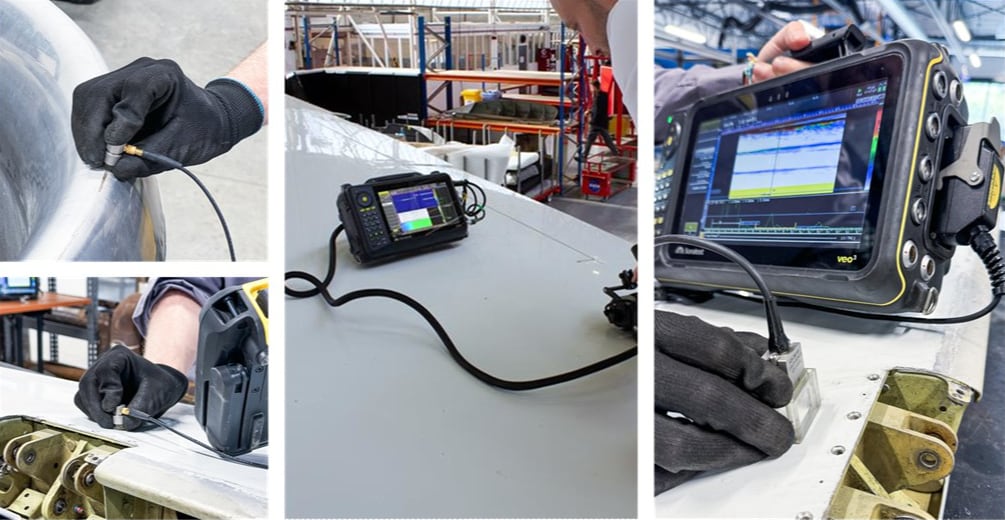
Please contact our Sales Team if you have any questions. You can also find more solutions on our website.
To subscribe to our Aerospace Ultrasonic Inspection Series, please click here.
News Filter...
The latest news from Sonatest direct to your inbox.
Tags
- Phased Array
- Careers
- Exhibitions
- TFM
- CRFRP
- Composite Materials
- UT Testing
- WheelProbe 2
- Wave
- Software Update
- Transducers
- Education
- Weld Inspection
- Corrosion Mapping
- Ultrasonic Testing
- alphagage+
- Linear Scan
- Pipeline Integrity
- User Story
- Weldments Advanced UT
- metals
- Austentic steels
- Pipelines
- Storage Vessel
- Pressure Vessel
- Rail
- Boiler
- Flanges
- Nozzels


