
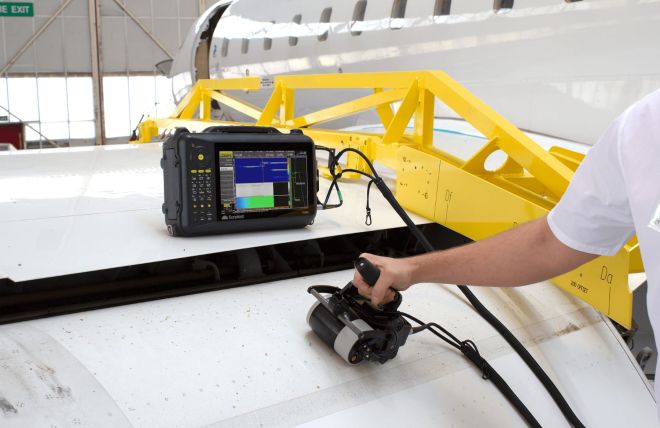
Follow our latest UT inspection series
This guide outlines common aerospace composite inspection scenarios and the optimal probes to tackle them, ensuring both reliable detection and efficient coverage.
Probe Selection Guide for Composite Applications
| Inspection Scenario | Recommended Probes | Why It Works |
|---|---|---|
| Flat wing skin or fuselage panel | Very Large Areas: WP2-128E Large Areas: WP2-64E Smaller Areas: X3A + Glider | Linear phased array with rubber delay offers consistent coupling and fast scanning over large flat surfaces |
| Curved fairing or tight radius part | RB (Rubber Ball) | Small contact area with compliant tip for complex curves and confined areas |
| Thick GFRP with high attenuation | Single Sided Inspection: X6B + Hydroglider Through Transmission: RP or STP | Low frequency for deep penetration; dry-scan options eliminate the need for immersion |
| Thin CFRP like an inlet or fairing | Large Areas: High-frequency WP2 or X3A + Glider Spot Checks: RDT | High-frequency improves resolution on thin laminates; delay lines protect surface finish |
| Bonded doubler or patch repair | X3A + Glider | Excellent near-surface resolution with full contact over variable surfaces |
| Water-sensitive carbon-carbon leading edge | RP or STP (dry-coupled TTU) | Dry through-transmission avoids water; ideal for C-C materials or moisture-sensitive components |
| Large flat skin panel | WP2 (64 or 128 element) | Covers wide areas quickly with integrated encoder and high-quality C-scan output |
| Tight access bracket or subcomponent | FCG, RDT, or RBRB | Small-format delay probes reach confined spots where arrays can’t fit |
| Thin laminate TTU scan | X3A pair or FCG pair | Enables through-transmission for bond checks; compatible with encoded or manual setups |
| Contoured radomes or variable-thickness panel | X3A + Glider | Flexible rubber wedges conform to curves, enabling accurate thickness and delamination mapping |
Choosing the Right Probe Design
RB Rubber Ball Probe:
Provides excellent coupling on curves and protects probe faces on composites. The small contact point and its soft delay material allow the user to control the thickness over complex part regions.
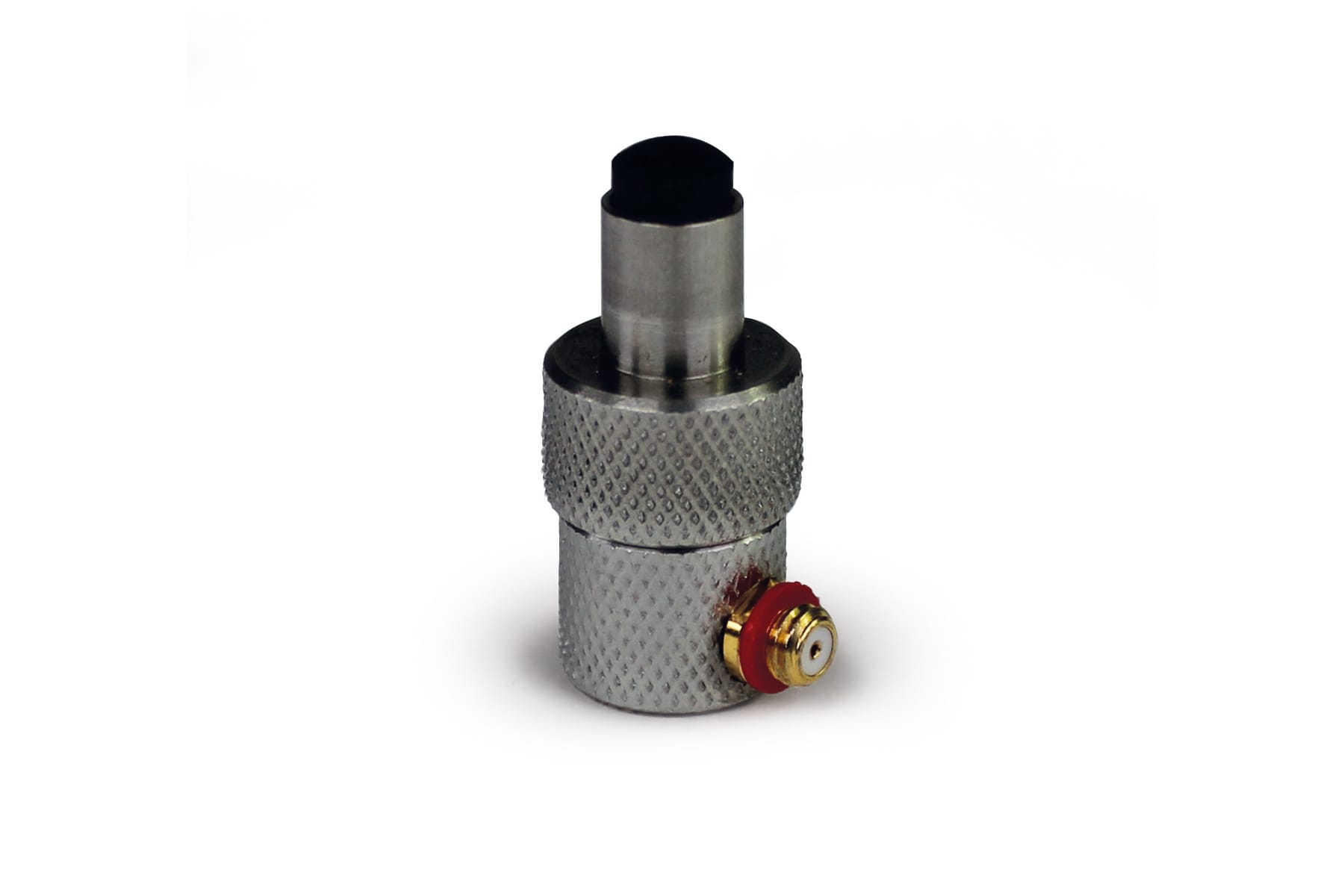
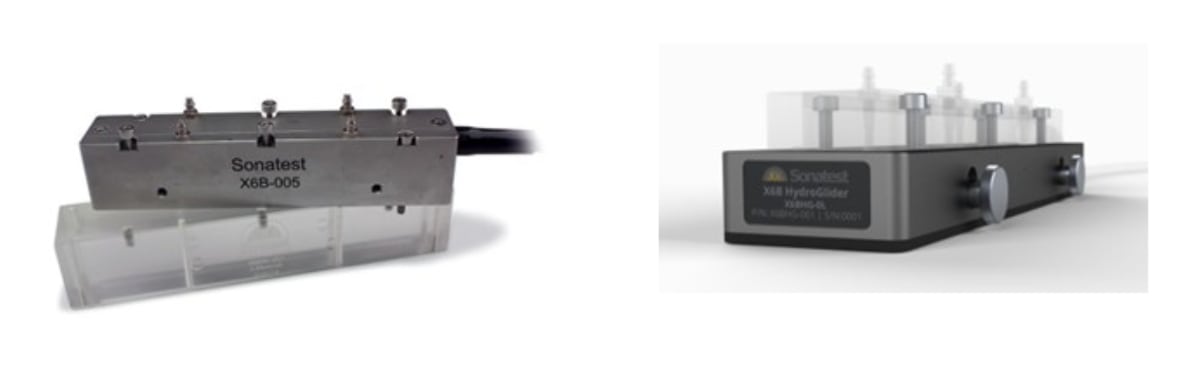
Low-frequency arrays (X6B + Hydroglider):
Boost penetration through thick, attenuative materials. The Hydroglider prevents probe wear, improves water irrigation and allows deep inspection without the wedge limitation.
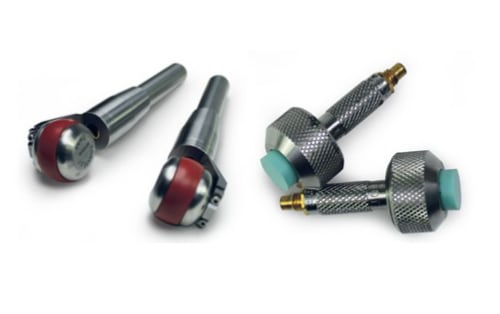
Dry-scan probes (RP, STP):
For optimal detection on surfaces or areas where water is not permitted. The probe also has a narrow band response and often requires a specific instrument (highly sensitive and long pulsing sinus signal). Penetration through honeycomb or foam is possible with these probes.
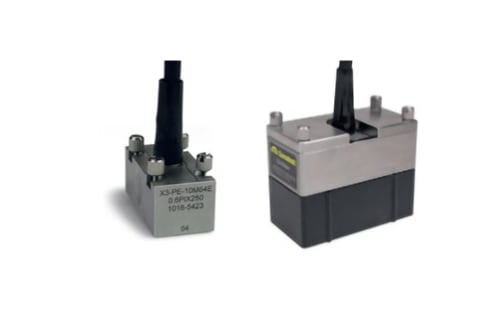
X3A + Glider:
Linear array paired with a soft rubber wedge ensures consistent coupling, excellent near-surface resolution, and smooth encoded scanning on flat or moderately curved surfaces. The X3A is available in various frequencies to suit any material type or size.
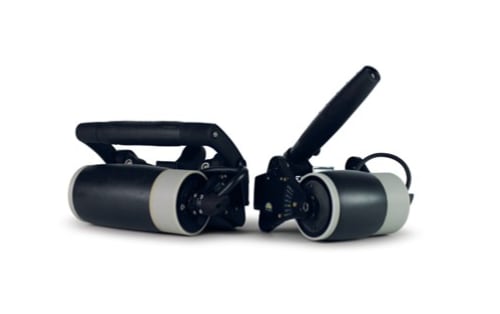
WP2 WheelProbe:
High-speed linear scanning with integrated encoder, optional widths (2" 64 Element or 4" 128 Element), and multiple accessories such as handles and magnetic roller options.
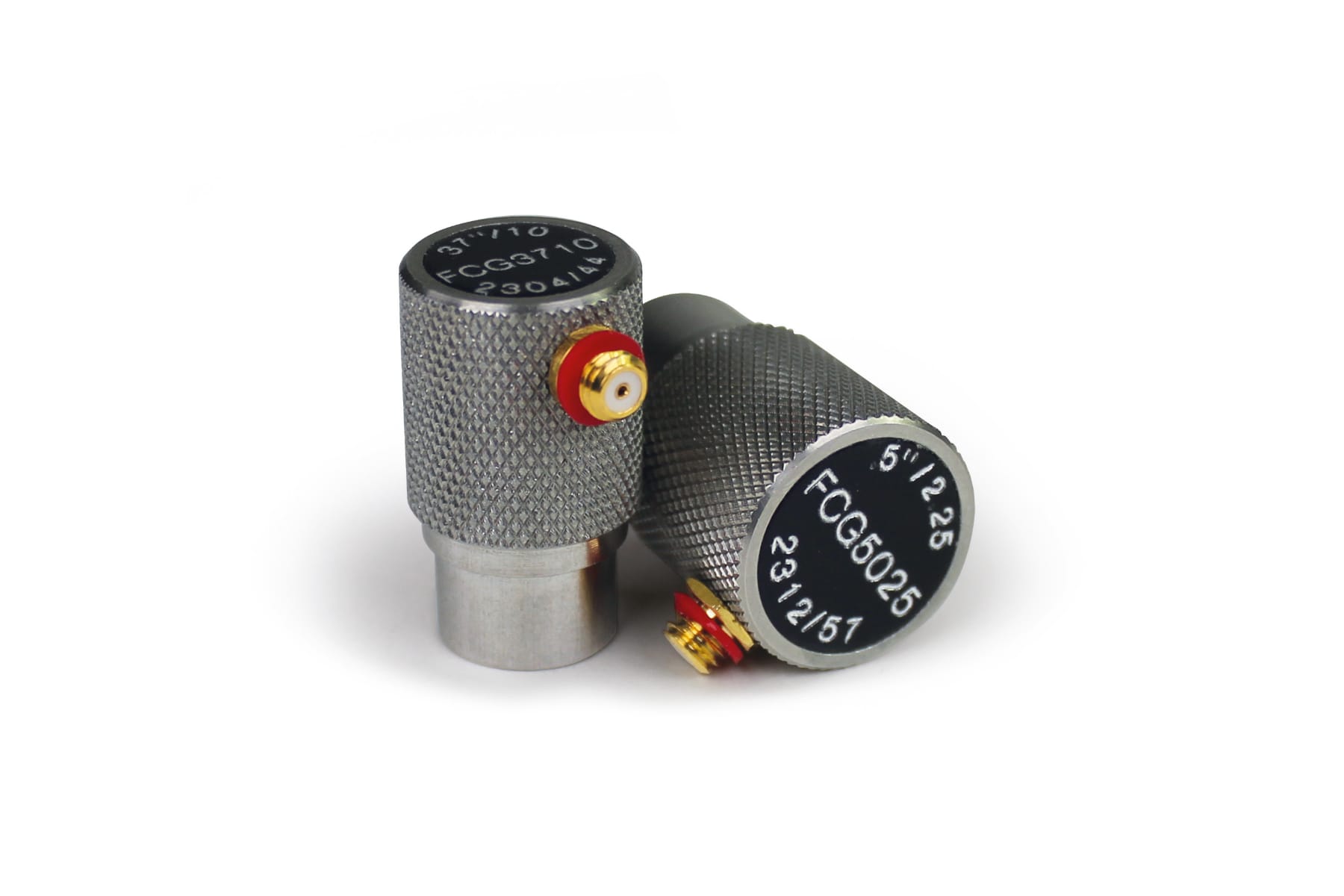
FCG and RDT Probes:
Compact, conventional UT options for precision work in tight spots. The RDT has a higher near surface resolution because of its delay line integration. The FCG frequency range is 1 to 20 MHz while the RDT models start at 2.25 MHz.
Conclusion
Selecting the right probe for composite inspection isn’t just about fit; it’s about optimizing detection, resolution, and scan efficiency for each unique geometry and material type. Whether you're dealing with large flat skins, tight-radius fairings, moisture-sensitive surfaces, or thick attenuative laminates, Sonatest offers a versatile range of probes and wedges to match the challenge. By understanding how probe characteristics, such as frequency, footprint, coupling method, and flexibility, align with specific applications, technicians can ensure accurate, reliable inspections across the entire airframe. For professionals looking to expand their skills and knowledge in ultrasonic testing, Sonatest also provides NDT Education resources and training opportunities.
Please contact our Sales Team if you have any questions. You can also find more solutions on our website.
To subscribe to our Aerospace Ultrasonic Inspection Series, please click here.
News Filter...
The latest news from Sonatest direct to your inbox.
Tags