- Application Notes
Defect Detection in Carbon Fiber Skins Using Phased Array Ultrasonic Testing
Carbon fiber reinforced polymer (CFRP) skins used in aerospace applications must be free of defects to ensure structural integrity and long-term performance.
Follow our latest UT inspection series
During manufacturing or service, flaws, such as delaminations, entrapped foreign objects (FOD), porosity, and disbondsmay form. Phased Array Ultrasonic Testing (PAUT) offers an efficient and high-resolution method for detecting and characterizing internal flaws. This note explores the application of both pulse-echo and through-transmission techniques to composite wing and fuselage skins using advanced PAUT equipment.
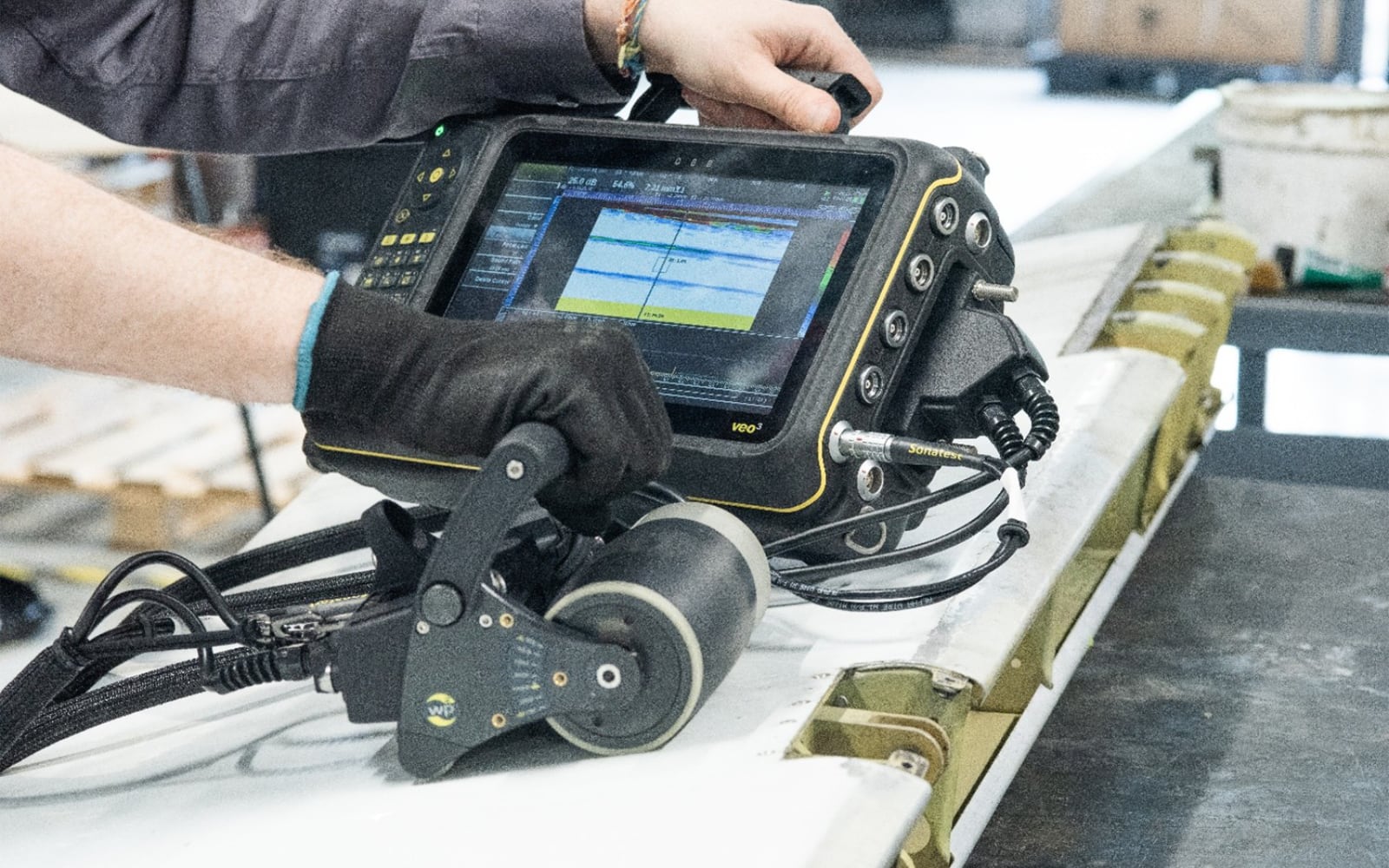
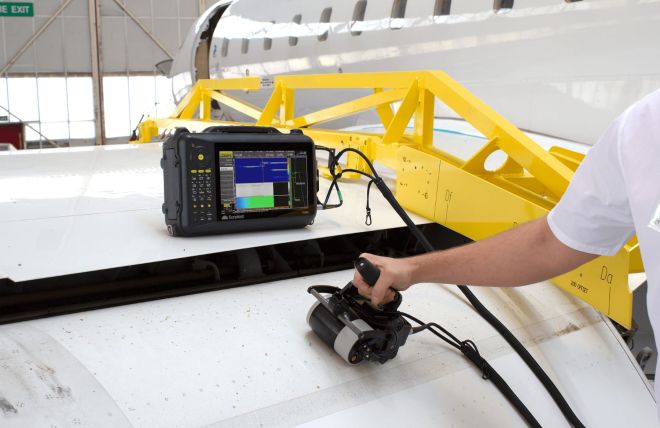
Fig. 1 - Phased Array Ultrasonic Testing (PAUT) on a composite wing panel
Challenge
Defects in CFRP materials can be difficult to detect due to their anisotropic nature and the need to avoid water saturation or couplant intrusion. Delamination and FOD often produce minimal surface indications and may occur in complex areas such as stringer runouts, taper transitions, or tight-radius corners. In production environments, rapid scanning of large panels with reliable defect mapping is critical. In MRO or QA/QC, fine flaw characterization and recording are required to support repair decisions and compliance with aerospace standards.
Solution
Phased array systems like the Veo3 and RSFlite offer excellent capability for composite inspection. The X3A probe with Glider wedge enables efficient scanning of flat or gently contoured surfaces using pulse-echo. Large-area C-scan maps are generated in amplitude and depth views, allowing for easy identification of internal delamination, porosity, and resin variation.
For foreign object detection or evaluation of bond uniformity, through-transmission can be employed using two probes mounted on opposite sides of the panel. These matched pairs detect signal attenuation caused by entrapped shims, bagging material, or dry resin zones.
Data can be collected in linear scan mode and presented as A-scans for signal analysis, B-scans for vertical cross-sections, and high-resolution C-scans for mapping flaw size, shape, and depth distribution. Inspectors can analyze echo timing, amplitude loss, and reflection consistency across scan views to differentiate between flaws and geometric issues.
Example Defects
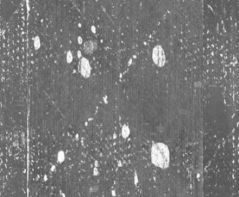
Delamination
A-Scan: Drop in backwall echo
B-Scan: Flat, horizontal reflection
C-Scan: Localized amplitude or depth loss
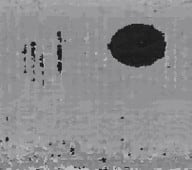
Disbond
A-Scan: Weak/no signal past bond
B-Scan: Loss of signal at bond line
C-Scan: Large low-amplitude zone (TT)
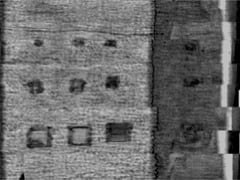
FOD
A-Scan: Local attenuation, no clear echo
B-Scan: Shadow or signal dropout
C-Scan: Isolated dark spots
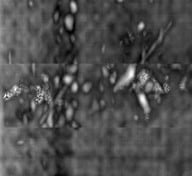
Porosity / Resin Rich
A-Scan: Scattered backwall echo
B-Scan: Cloudy or patchy appearance
C-Scan: Speckled or mottled region
Benefits
- High-resolution imaging of both delaminations and embedded FOD
- Large-area coverage with consistent coupling using the Glider or WheelProbe
- Simple scan plans for flat or moderately contoured surfaces
- Data recording and C-Scan mapping support quality traceability
- Compatible with common aerospace PAUT procedures and standards
- Can be adapted for either full panel scanning or targeted evaluations
Products Used
- Veo3 or RSFlite PAUT instruments
- X3A probe + Glider (rubber wedge) for pulse-echo inspections
- WheelProbe 2 (WP2) for larger areas
- Roller probes for through-transmission setup
- Optional AXYS encoder for data logging and C-Scan generation
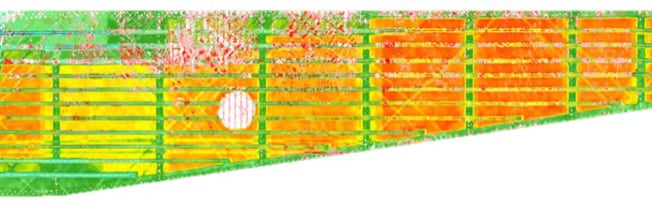
Fig. 2 - C-Scan of a Wing Stabilizer showing defect location and severity
Conclusion
Phased array systems provide flexible and reliable solutions for detecting internal defects in CFRP skins. Whether scanning entire fuselage panels for delamination or evaluating localized FOD near structural edges, PAUT with the right probe setup offers the clarity, efficiency, and repeatability needed in both manufacturing and MRO environments. Combining pulse-echo and through-transmission techniques enables comprehensive assessment of composite integrity.
Please contact our Sales Team if you have any questions. You can also find more solutions on our website.
To subscribe to our Aerospace Ultrasonic Inspection Series, please click here.
Filter by Industry
- Aerospace Aeronautical
- Aerospace Astronautical
- Chemical & Petrochemical
- Oil & Gas
- Nuclear Energy
- Wind Power Renewables
- Transport Network Infrastructure
- Rail
- Military
- Maritime Shipping
- Automotive
- Pharmaceutical
- Mining
- Construction & Infrastructure
- Technology & Research
- NDT Service Providers
- NDT Education


